
Queen
„Queen II“
Rock, Glam, Art, Prog. Gatefold, Reissue, Half-Speed Remaster, 180 Gram 2015 (1974)
There's really no need to say anything more about the band Queen, founded in 1970, about Freddie Mercury, or their albums. Therefore, I'll offer a technical and prog-head perspective, because for me, Queen II, released in 1974, was a prog album, albeit probably unintentionally. The division into a White Side, on which Brian May wrote four songs and Roger Taylor one, and a Black Side, on which Freddie Mercury wrote all the songs, points towards a concept album. Likewise, a dominant theme prevails, and there are no breaks between many of the tracks. Of course, Queen II differs from contemporary prog bands like King Crimson, Genesis, or Yes. Precisely because these bands are considerably more challenging to digest, Queen II is, for me, a wonderful contrast and not a pure prog album. With "The Seven Seas of Rhye" on side B, the band's first "hit" is included.
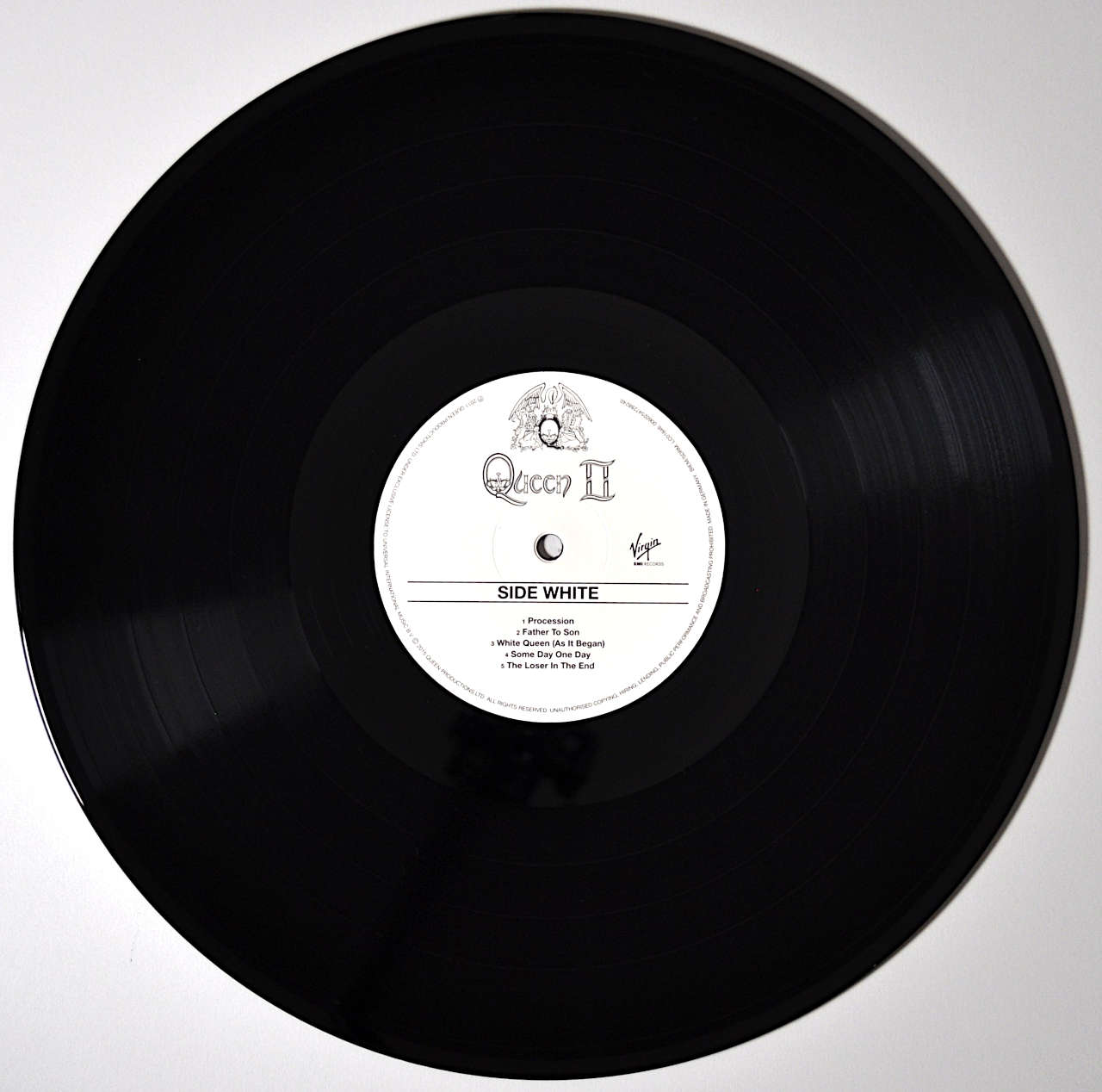
"Procession," "From Father To Son," "White Queen (As It Began)" (sung by Mercury), and "Some Day One Day," sung by Brian May, easily qualify as prog. In contrast, song 5, "The Loser In The End," written and sung by Roger Taylor, is not prog. It's inspired by rock numbers from Led Zeppelin, and that's clearly audible. Do I find "The Loser In The End" out of place? No, the contrast to the first four songs is welcome and reminds us that Queen is not a prog band.
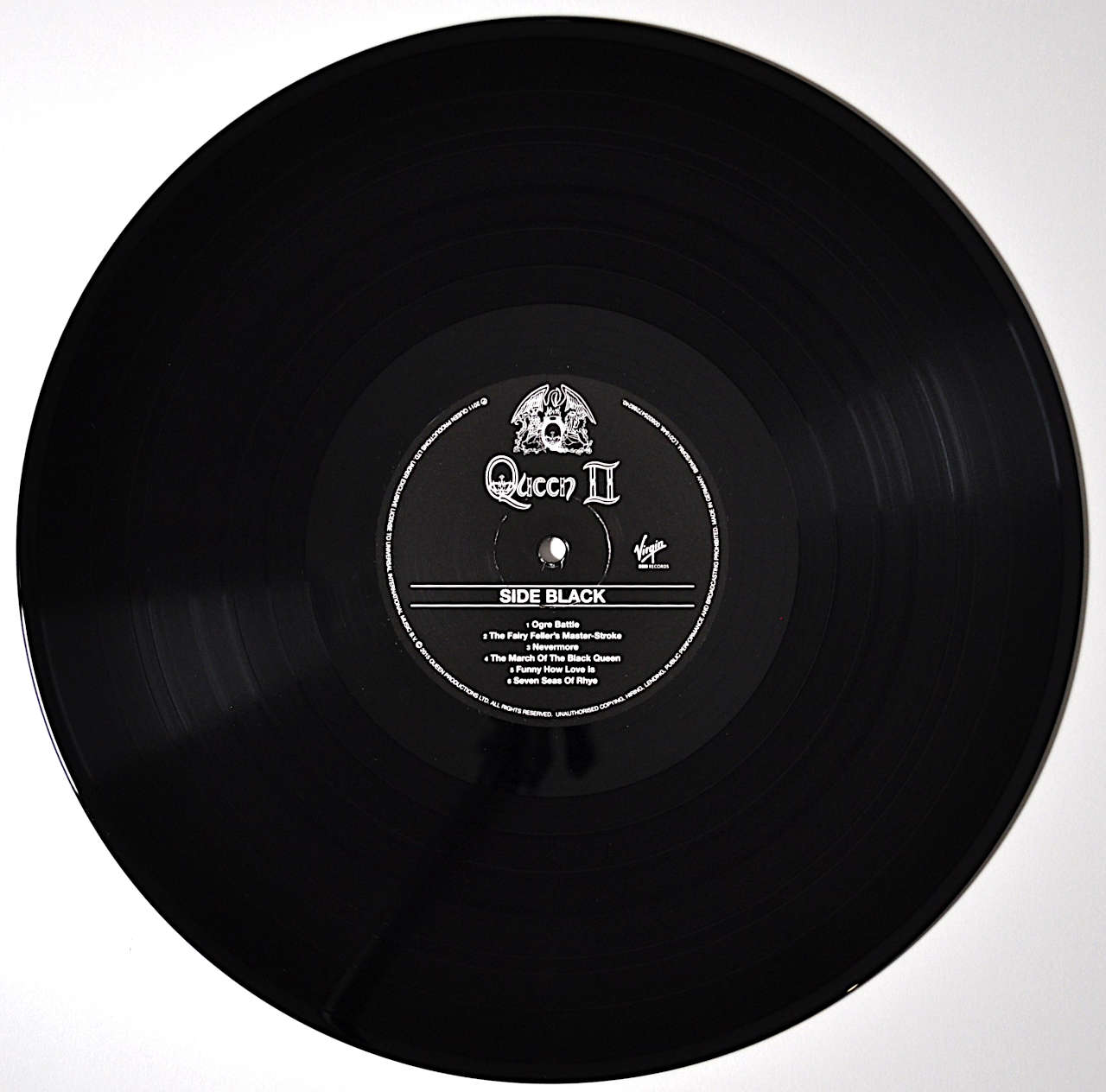
All the songs on the Black Side are written and sung by Freddie Mercury. "Ogre Battle," for example, is reminiscent of The Who. Queen uses rewound tape at the beginning of the song. Later, popping sounds are created with flanger effects, drums, and a gong. "The Fairy Feller's Master-Stroke" features multiple vocals, some of which reach very high notes. Here, prog rock greets us with a friendly nod. And in "Nevermore," Freddie Mercury, accompanied by piano, demonstrates just how well he can sing. "The March Of The Black Queen" is permeated with Mercury's ability to entertain. Pompous. "Funny How Love Is" then segues into "The Seven Seas Of Rhye," which, unlike the instrumental version on the album "Queen," is twice as long here and includes lyrics.
Freddie Mercury: Vocals, Piano
Brian May: Guitars, Piano, Vocals, Bells
John Deacon: Bass, acoustic Guitar
Roger Taylor: Drums, Percussion, Vocals
Roy Thomas Baker: Kastagnetten in „The Fairy Feller’s Master-Stroke“
For me, this is more a prog album. Exquisite vocals, superb musicianship, no synthesizers used to create guitar effects. A concept album. Seamless transitions between many songs. For me, the best Queen album ever.
Technically, this is a half-speed remaster from 2015, remastered at Virgin EMI Music's Abbey Road Studios.
Half-speed mastering is a technique for cutting acetate lacquer for vinyl record production. The cutting lathe's platter rotates at half speed, while the signal to be recorded is fed to the cutting head at half playback speed. This results in improved dynamics, especially in the high frequencies, and more precise grooves ensure a more detailed sound. The difference is audible on better turntables, and I try to get half-speed masters whenever possible. The technique itself isn't new, however; it's been used on wax masters since 1949. Today, select albums are still cut using half-speed technology. But if you already own these albums in good quality, there's no need to invest in a new record.
The photos are all from my LP. The rights to all designs, logos, texts and fonts that can be seen in the photos are of course owned by the copyright holder.
TheProgThief
©27.11.2025
