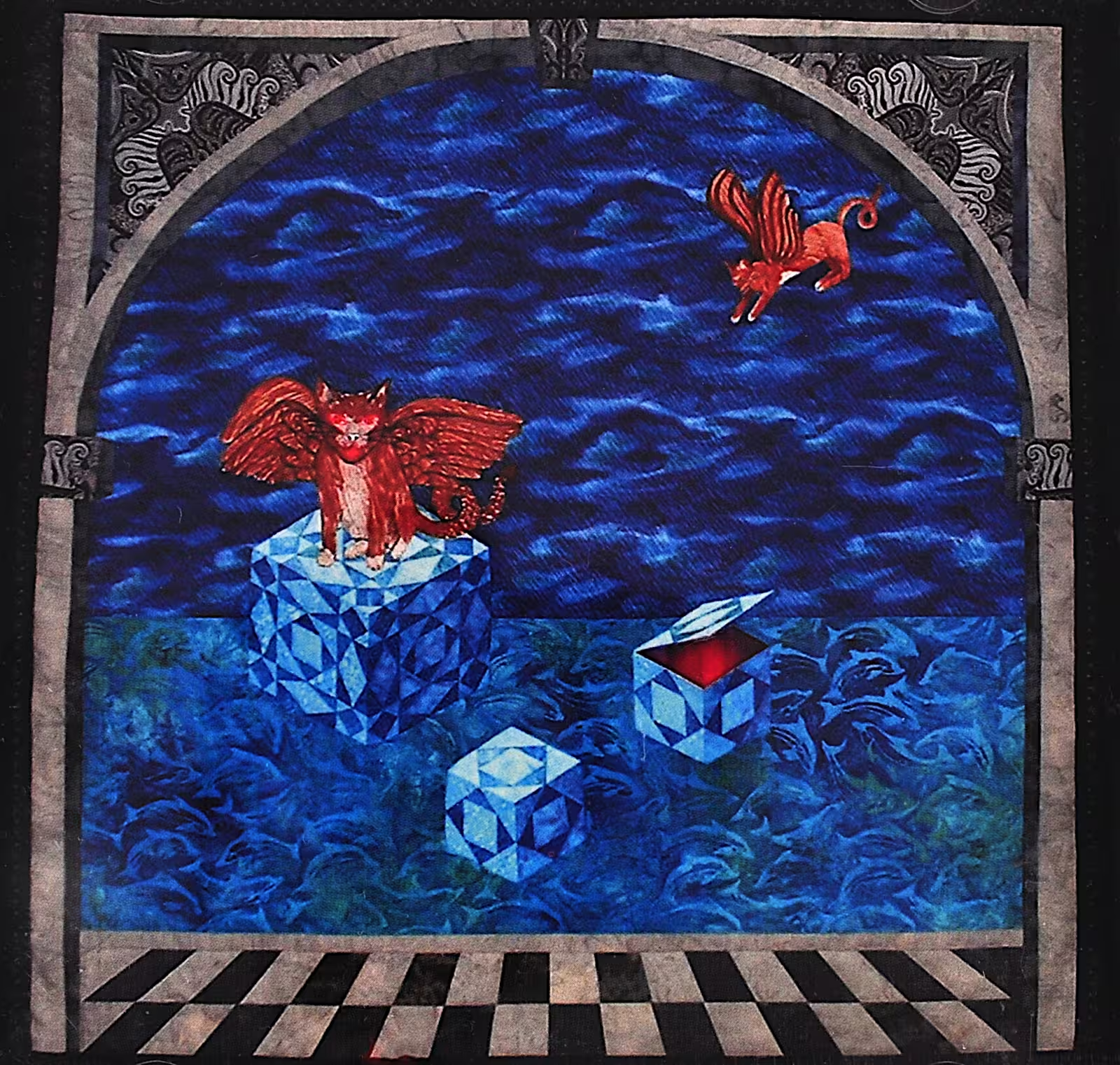
Phideaux
Prog-Rock, Art-Rock, Psychedelic
- CD, 2003
- Bloodfish Music
- zyz1001
- used
"Fiendish" was released in Germany in 2004, considered by many to be the project's first album. Their actual debut album, "Friction," failed to find a major label and is now a rarity. On the surface, it deals with "exorcism," which is to be understood here as a metaphor and permeates the entire album, which, however, is not a concept album. It's also not really easy to categorize Phideaux into a specific genre. The danger is always that too many ingredients can create an unpalatable meal. But fortunately for us, Phideaux is an excellent musical chef.
Phideaux is a project founded by Phideaux Xavier and Rich Hutchins. Initially more of a virtual band, their genre-defying style has continuously evolved. So what is it on "Fiendish"? Folk-rock? Art? Psychedelic? Pop? Mainstream? Prog? The answer is simple: all of it on one CD.
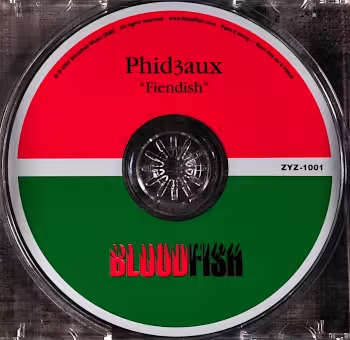
I'll start with Stanislaw Lem (d. 2006), a well-known Polish writer. Although his works aren't exclusively science fiction, his philosophical works (e.g., Golem XIV) are also regularly relegated to the science fiction category. And so it is with Phideaux; the prog category is simply too small. No, Phideaux doesn't play classic prog. And yet, we find: fragmented song structures, musically shifting layers, psychedelic and art-rock passages, more complex arrangements, and a certain willingness to subvert expectations of song structure. Add to that multi-part vocals and quite a bit of guest musicians.
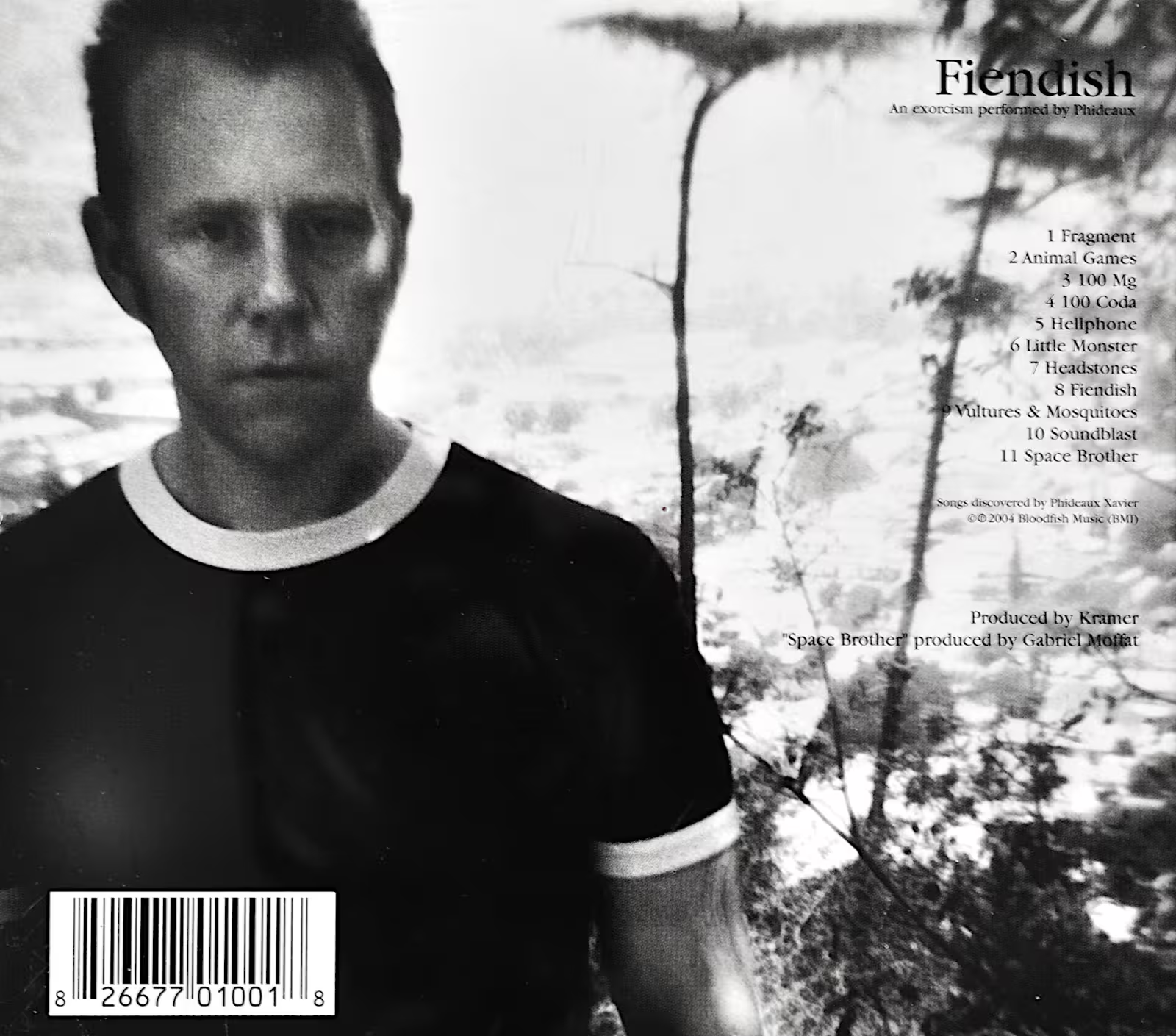
In the track "Fiendish," we find the true essence of the album: "We Are Guilty." The demons aren't just out there; we are part of the problem. Phideaux himself essentially tells us what this album is about. Fiendish... is an exorcism of our inner demons and insecurities, which we all possess. At the same time, he extends this to the "fiends and fiendish aspects" of the world he perceives. Without having read this, I would have continued to assume the songs were disjointed. The album worked for me even without this knowledge; now it works even better.
I'll try to illustrate my interpretation using the last song, "Space Brother," as an example. Someone will come and save us. Instead of changing, we wait. That would be the bitter consequence, but it contrasts with fighting our inner and outer demons. Ultimately, "Space Brother" is the longing for the savior.
My suggestions: “Fragment”, “Soundblast”, “Fiendish” and “Space Brother”.
Conclusion.
A lavish buffet. Phideaux values melody, defies categorization, and can really "cook" things up. As is so often the case in music, he leaves room for interpretation. I recommend all dogmatic prog heads leave their trenches. Even if it's not prog, it still has many elements to offer.
Ariel Farber: Vocals
Valerie Gracious: Vocals
Richard J Hutchins: Drums
Gabriel Moffat: Funeral Water, Sonar, Space Guitar, Funeral Voices, Space Beeps
Phideaux Xavier: Vocals, Piano, Guitar, Mellotron, Synthesizer, Autoharp, Organ
The photos are all from my CD. The rights to all motifs, logos, texts and fonts that can be seen in the photos are of course owned by the copyright holder.
TheProgThief
©20.September.2026
